
How I Wrote My Novel. I hope you find this useful.
Getting Started
I contacted a friend of mine, Tim, who had written a couple of novels and got some tips from him. He said the best thing to do is just start writing and see where it ends up. He also recommended self-publishing as a good starting point. The alternative was to spend loads of money on professional services. I took the self-publishing route using Amazon’s Kindle Direct Publishing service (which is free). Here’s the link to get started: KDP.
Tim’s books are on Amazon: Tim’s Books.
I began the project as a memoir, but as it moved closer to the present, I became aware that some parts of my life were still too close—and too entangled with the lives of others—to be told directly. Allowing the book to become fiction gave me the freedom to explore the emotional truths of the story, with names changed and details reshaped. Facts loosened, imagination stepped in, and the narrative found its own momentum.
How Long Should It Be?
One important thing I learned early was how long the book should be. You can search this online, but you should aim for around 80,000 words, plus or minus 10,000. Novels of this length are long enough to satisfy a reader’s desires without being so drawn out that the story becomes boring. If you write less, like 40,000 words, readers may feel cheated—like buying a 90g packet of potato chips only to find the packet is half empty. My second book, Beneath the Fourth Light was 53,000 words, but in that case the ending stopped where certainty ended, and anything more would have over-explained the story.
Useful Resources
Check out the following websites:
- The Write Practice for writing tips
- KDP for self-publishing
- Canva for book cover designs
- Goodreads for beta readers and other resources
- ProWritingAid for editing software
- Scribe Media for marketing advice
- DIY Book Formats for book formatting
- BBC Maestro for writing courses
- Reedsy for writing resources
- BISAC Subject Headings to categorize your publication
Searching the web will provide you with heaps more sites—so read as much as you can, but be discerning. Good luck!.
Writing The Novel
I started writing my memoirs in chronological order. I did lots of research to ensure my memory and facts were reasonably aligned. This included the use of Ancestory, as well as getting some inside information from my cousin Susan in Oregon, USA. I got to about 25,000 words. Once I decided to turn my book into a novel, I wrote it in the first person and reached about 45,000 words. I used a manuscript template from Amazon initially but later found a template that is better for professional assessments and edits. It had double line spacing. I then had a professional manuscript assessment from someone I found who lives in WA. (A manuscript is a typed document, being the writer’s first and subsequent versions of a book before it is prepared for publishing.)
After the assessment, I had lots of work to do, not the least being to double the number of words! When I got to 72,000 words, I sent it out to an online professional editing service for the princely sum of AUD $1,745: Book Editing Services. I also bought a subscription to some editing software called ProWritingAid, which is an add-on to Microsoft Word, my chosen writing tool. With some great feedback, I continued the editing process. When I eventually got to 90,000 words, I sent it out to a beta reader who gave me a scathing review. I felt like giving up, but I had a glass of red and used the feedback to make substantial changes to the manuscript. The biggest change was from first-person to third-person omniscient. This gave me the leeway to see things from anyone’s perspective, allowing the reader to see things that the character may not but that may be relevant to the story. Then I had to simplify the plot and avoid events that didn’t move the story forward. I added more dialogue and stuck to dialogue tags like ‘asked’ or ‘said.’ I also had to write more ‘show’ than ‘telling.’
After my 8th version of the manuscript, including these changes, I sent it out for a review by a new beta reader. Beta readers charge about $80. You don’t really know how good they are, but it is worth getting the feedback. This time I got a rave review—the opposite of the first beta read. It was then that I decided to publish my book. I could have spent two or three thousand dollars getting it edited once again and ready for publishing, but I wasn’t confident that the editing process would stop there—so I bit the bullet and published. Since then, I have had great reviews, although I haven’t gotten the book into the best-sellers list or even the new releases on Amazon, because there is a whole lot of marketing that needs to be done to trigger the Amazon algorithms.
Writing The Book Is Only Half Of It
Publishing and Marketing
I used Kindle Direct Publishing (KDP) to set up an entry in the book section of Amazon. I included an e-book, a paperback, and a hardcover version of the book. You use the Kindle app to read the e-book. The beauty of KDP is that you don’t pay anything. Instead, Amazon takes a fair share of the sale price of the book. You get royalties paid into your bank account, but you will need to sell thousands, maybe more, if you want to make a living out of it!
To do this, I had to use Amazon’s template for a 6” x 9” novel and use their tool called Kindle Create to set up the e-book. All the instructions are on KDP. KDP also assigned the ISBNs, so I didn’t have to buy these—if I want to publish outside Kindle, then I would buy ISBNs that I can use anywhere, including Amazon Kindle. You must have an ISBN for each version of your book, i.e., e-book, paperback, and hardcover. See My Identifiers.
For marketing, I used KDP’s Author Central, A+ Content, and a free book promotion. I created this website and hope that I can use it to further promote my book. I put the book on Kindle Unlimited. I advertised the book on my LinkedIn and Facebook accounts and set up a special account for the novel on Facebook. I also established an Instagram account where I can further promote the book. You will have to come back some other time to see if I have found a way to promote the book more widely. Meanwhile, I am contemplating writing another book.
Book Cover
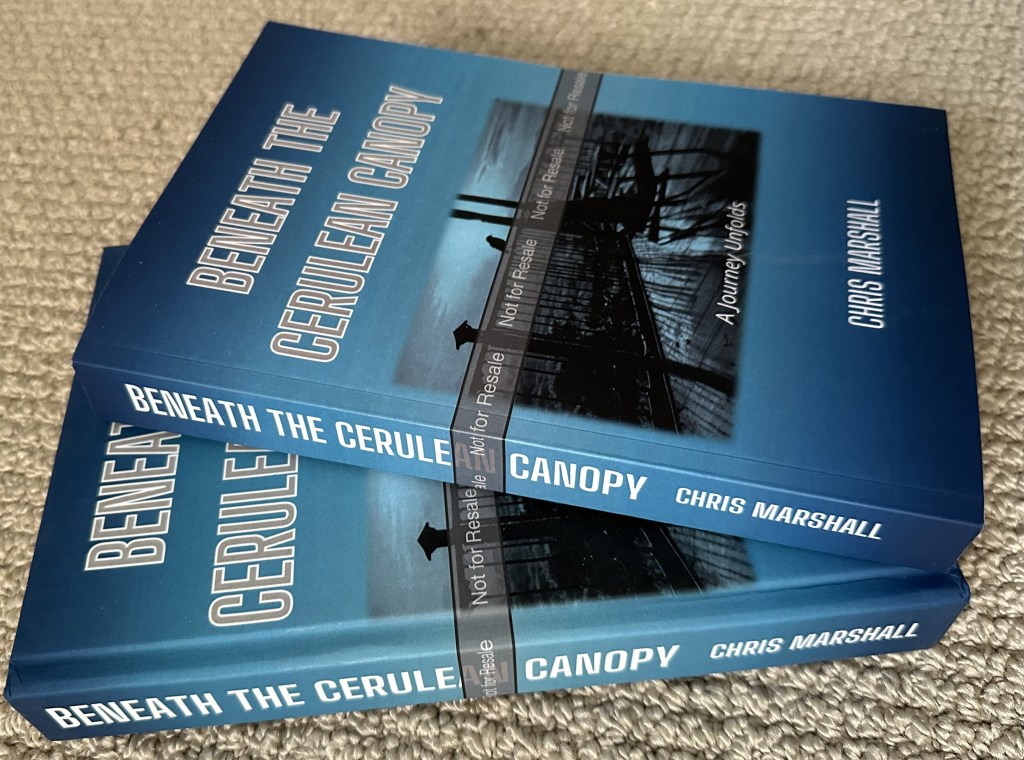
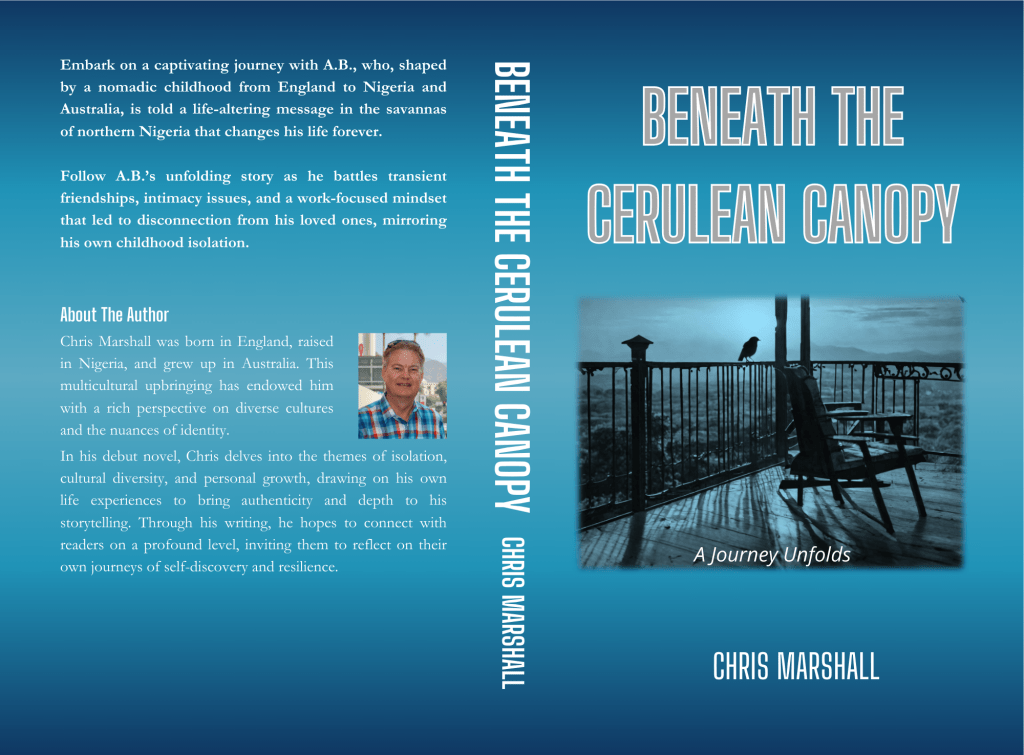
KDP provides you with the specifications for the book cover. The cover must be a single PDF file that includes the back cover, spine, and front cover as one image. There is also a minimum page count if you want text on the spine. KDP Help provides all the detail including how to create images, text, and final formatting such as removal of crop marks, flattening transparencies and so on. In KDP search for ‘cover’ and then select either Create a Hardcover cover or Create a Paperback cover. I used Canva to design the book cover. Although it looked okay, like it does in the image below, when I saw the printed book the text wasn’t centralised so I had to modify the image a little. It is my advice to buy a printed proof of the book before you have it published – KDP gives you this option. The book will be printed with a ‘Not For Resale’ watermark and a unique barcode with no ISBN.
Novel Writing Tips
A novel is a book-length work of fiction that tells an entire story through the elements of fiction. If you want to know the detailed elements of writing a novel, then you might like to search the web using the question, ‘What is a novel?’ There are six elements that you will need to tackle:
- Main Character: You need a protagonist. This character will need a character arc in which they change in some way during the course of the story. Search for ‘character arc.’
- Point of View (POV): POV is the lens through which the story is told. There is first-person POV, second-person POV, third-person POV, and third-person omniscient POV. For fiction, first-person or third-person omniscient seem to be the best.
- Plot and Structure: These are key to making the story flow well and remain interesting to the reader. Plot is what happens and why. Story structure is the order in which plot events are told to the reader.
- Setting: You need to situate your reader in a given environment, including time and place. It could be in an apartment, a workplace, a restaurant, a bar, or in the middle of the woods. How important the setting is will determine how much you write to describe it throughout your story.
- Style and Tone: These affect the mood of the novel. You can be very detailed like Dickens, stripped down like McCarthy, or sparse and understated like Hemingway.
- Theme: The theme of your novel might be the seductive nature of the pursuit of money or the rite of passage from innocence to experience. I read somewhere that you should illuminate, not preach, so the reader experiences the story and is not told how to experience it.
Add to these six elements the various fiction techniques, and you might be wondering why you wanted to write! But really, it is useful to know the ins and outs of writing fiction so that you don’t make a rod for your back later on. You will need some professional editing services at some point in the writing process. Fiction techniques include storytelling techniques, how to write scenes with dialogue, ‘show don’t tell,’ and exposition for backstory and the protagonist’s inner thoughts. ‘Show don’t tell’ is worth searching online for, as it is important you understand this concept, which is not easy to explain in a few paragraphs.
An Approach To Novel Writing
Generating An Idea
There are many articles on how to go about writing your novel. One approach to novel writing uses the six steps I have summarised here, starting with the Idea.
The idea is usually about the following:
- Your initial thoughts about characters, plot, setting, and themes.
- Who is your main character?
- What does your main character want?
- What prevents the main character from getting what they want?
The Opening
Another thing to consider is how to write your opening sentence, paragraph, page, and chapter. Again, do some research on this, but the idea here is that you want to capture the reader’s attention early and make them stay to read your entire book. It’s like the importance of your front yard appearance when you want to sell your house.
See Famous Opening Lines below.
Genre, Audience, and Intent
Once you have an idea, the novel-writing process will feel much less daunting if you can identify three things: the genre for your novel, an audience that might enjoy your novel, and your intent for writing the novel. There are rules for writing different genres, but rules are made to be broken— so use them as a guide.
Read A Lot, Write A Lot
It’s a good idea to start reading lots of novels. You can use the Amazon feature that allows you to read a sample of the book. This is a great way to see how writing is done. Another rule of writing is to write a lot. Write at least 500 words a day and spend at least an hour each day writing and researching. You could set up a schedule, but that all depends on what else you have to do in your life.
Classic books you might like to read:
- The Great Gatsby by F. Scott Fitzgerald.
- The Catcher in the Rye by J. D. Salinger.
- The Sun Also Rises by Ernest Hemingway.
The idea is not to read just for pleasure, nor how many you read, but what you read and how you engage with it. It’s a way to learn more about writing.
Outlining vs. ‘Pantser’
If you are a structured writer, then you may wish to write a novel outline that scaffolds your idea into a working plot. The way I wrote is using the ‘pantser’ method, i.e., writing by the seat of your pants! The pantser method allows you to surprise yourself with where the story might take you.
John Grisham and J.K. Rowlings are outliners or plotters.
If you’re a pantser, you are in good company too: famous pantsers include Stephen King, Margaret Atwood, Mark Twain, and Raymond Chandler.
I think a combination is best. Start with a rough outline and then start writing.
Drafting and Editing
Your first completed draft will be satisfying, but undoubtedly it will be pretty ordinary—so don’t expect miracles. Editing your book will take up the biggest proportion of the whole writing process. You could write a novel in three months and edit it for three years or longer. Like the writing process, there’s no strict timeline for editing your novel, but don’t expect the editing to be quick and easy.
I wrote my memoirs in 3 months, my revised fiction story after another 3 months, and published in the 12th month. Even after publishing the book, I have found errors and made subtle changes to the story—so it is never-ending, and when you stop making changes, you have really abandoned your book!
Famous Opening Lines
Here are some famous opening lines to novels.
As you write always remember this little quote from Mickey Spillane: ‘The first sentence sells your novel, the last sentence sells your next one.’
Call me Ishmael.
—Herman Melville, Moby-Dick (1851)
It is a truth universally acknowledged, that a single man in possession of a good fortune, must be in want of a wife.
—Jane Austen, Pride and Prejudice (1813)
Happy families are all alike; every unhappy family is unhappy in its own way.
—Leo Tolstoy, Anna Karenina (1877; trans. Constance Garnett)
It was a bright cold day in April, and the clocks were striking thirteen.
—George Orwell, 1984 (1949)
If you really want to hear about it, the first thing you’ll probably want to know is where I was born, and what my lousy childhood was like, and how my parents were occupied and all before they had me, and all that David Copperfield kind of crap, but I don’t feel like going into it, if you want to know the truth.
—J. D. Salinger, The Catcher in the Rye (1951)
This is the saddest story I have ever heard.
—Ford Madox Ford, The Good Soldier (1915)
He was an old man who fished alone in a skiff in the Gulf Stream and he had gone eighty-four days now without taking a fish.
—Ernest Hemingway, The Old Man and the Sea (1952)
Eventually they put Reacher in a car and drove him to a motel a mile away, where the night clerk gave him a room, which had all the features Reacher expected, because he had seen such rooms a thousand times before.
—Lee Child, Never Go Back (2013)
I was arrested in Eno’s diner. At twelve o’clock. I was eating eggs and drinking coffee. A late breakfast, not lunch. I was wet and tired after a long walk in heavy rain. All the way from the highway to the edge of town.
—Lee Child, The Killing Floor (1997)

First Chapters and Common Mistakes
When it comes to writing, you can spend lots of money and time reading books and websites, or you can just get on with it. I mentioned earlier about the first chapter. It is in this chapter and seeping into subsequent chapters that amateur writing comes to the fore. So here are few tips and common mistakes that you can avoid. No doubt you will read best-seller novels that make these mistakes – but readers might forgive them if the story is a cracker!
Fancy Writing: Vocabulary searching for a story. The simpler your language the better – in my opinion.
Distracting Information: Information that could be left out. Ask yourself, ‘If I left it out, would it detract or hinder the story?’
Too Much Description: Is the colour of her hair or eyes going to make any difference to the story? Include it if it does, but don’t include it if it is just extra words.
Timeline: Keep it simple—talking about things that happened in the past is pointless unless it directly moves the plot forward.
Engagement: Make your first chapter a great read. If readers lose track, get confused, or have to read backwards or skip forwards, they are likely to abandon the book.
Adjectives: Don’t overuse them. One or two at most.
Navel-Gazing: If the character is introspective before they are well-known to the reader, the reader loses interest—they don’t care about the character at this point. The first chapter should have very little history and a lot of action.
Clever Metaphors: Avoid needless clever metaphors.
Character Overload: Don’t introduce your reader to a dozen people, what they’re wearing, and how they all know each other and expect readers to remember or care about any of it.
Needless Detail: Don’t show off that you know how to Google for ‘research.’
Swearing: It’s fine in some genres and in 2024 it is not uncommon, but don’t overdo it. The swearing must have impact—too much, and the reader might turn off.
Backstory: Useful but can be overused. Research this a bit more to understand how to make backstory effective.
Action and Violence: Big action and violence need to matter to the story—having it for the sake of writing a BOOM ZAP POW paragraph can turn off your reader.
Emotional Scenes: Don’t overdo them. To understand and feel a character’s pain, the reader needs to know why this matters so much and is so traumatic. The reader can’t empathise if they don’t have the details. But you don’t want all the details in the first chapter.
Exclamation Marks: Don’t use them.
Scene Transitions: When something major happens, stop and start the next scene or chapter. Don’t show the reaction in the next sentence.
Scene Description: Always describe the scene—enough so the reader can picture themselves there.
Dialogue: Don’t use bad dialogue. Be realistic. Avoid clichés. Avoid ramble, even if that is what people really do, unless it adds to the scene/plot. Keep dialogue short and simple; conflict is in subtext and nuance. People rarely exchange information or say what they mean.
 Chris Marshall Books