A Journey Unfolds.


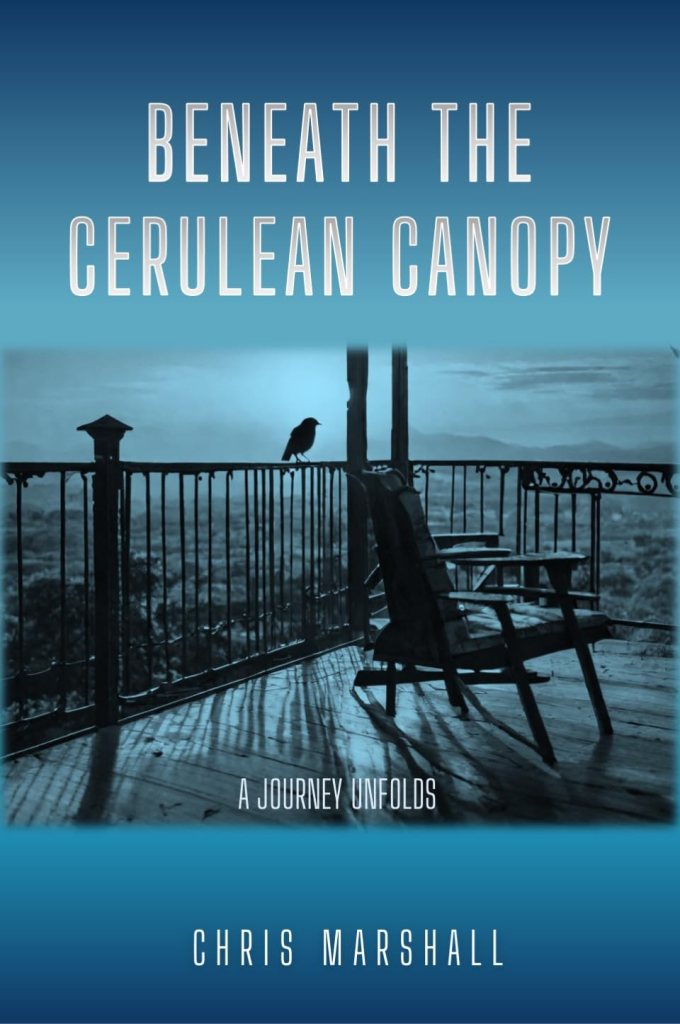
What’s Beneath the Cerulean Canopy about?
Coming of Age: Follow Alex’s transformative journey from the innocence of childhood to the complexities of adulthood.
Self-Discovery: Dive into Alex’s quest to understand the reasons behind his behaviors and uncover his true purpose.
Sage Wisdom: Encounter the wise individuals who impart crucial lessons and guidance to Alex along his path.
Father and Son Issues: Explore Alex’s unfulfilled longing for his father’s love and his struggle to acknowledge the impact of its absence.
Personal Growth: Witness Alex’s evolution as he learns, adapts, and matures into a thoughtful and reasonable man.
Adventures in Nigeria: Experience thrilling tales of colonial-era West Africa and the adventures that shape Alex’s journey.
Intimacy Issues: Discover Alex’s challenges with intimacy as he navigates a series of fleeting relationships, each leaving its own mark.
How far would you go to uncover the truth about your identity and the secrets of your family?
Beneath the Cerulean Canopy traces the life of Alex Stansfield, shaped by loss and a search for meaning. Beginning in 1962, Alex, an eight-year-old in Nigeria, is wrongly blamed for a tragic accident caused by his younger brother, but his father’s harsh punishment leaves Alex isolated and guilt-ridden. Finding solace in a chameleon’s companionship and the wisdom of an elderly sage, Alex embarks on a lifelong quest for purpose.
Amid constant relocations within Nigeria, Alex faces personal challenges, including racism, violence, and the Nigerian Civil War. The war forces Alex and his family to return to London as refugees, leaving behind everything except their suitcases.
The move to England exposes Alex to the gritty realities of late 60s London, where the clash of counterculture and social unrest intensifies his feelings of alienation. It also introduces new hardships, including bullying and isolation.
Alex’s father once again decides to move—this time to Australia. A fresh start in Australia offers hope, but Alex’s struggles persist. The novel vividly evokes Australia in the 1970s and 80s as Alex grapples with two failed marriages, marked by his inability to settle down and his drinking. His relationships with his sons and his family remain strained.
In the course of career setbacks and familial tensions, Alex uncovers a hidden family secret—a letter revealing his mother’s affair, and what it means for Alex. This discovery deepens his internal conflict, leading to a profound emotional reckoning. Alex’s father passes away before Alex can prove himself, adding to his burden.
In middle age, Alex faces the loss of his brother, mother, and sister, prompting deep reflection on his life. In the final chapters, surrounded by family, Alex takes his last breath, having found peace in the simple joys and relationships that defined his journey. His story is a poignant exploration of identity, and the search for meaning against the backdrop of Australia’s evolving landscape.

“As a fellow writer, I am reticent when someone asks me to read their first novel. Invariably, I set my expectations to ‘low’ and struggle as I work my way through their pride and joy. I was pleasantly surprised as I turned the pages of Chris Marshall’s Beneath the Cerulean Canopy. His story telling and use of descriptive phrases for everyday scenes and events speaks of an author with a maturity well beyond his debut novel. Congratulations Chris and I look forward to your next endeavour.”

“A fascinating account of a boy growing up in Nigeria during the 1960s, with “coming of age” experiences and family dramas exacerbated by the volatile politics of the last stages of the colonial era, and later the upheaval of moving to Australia. The Australian experience as a migrant in Perth will bring back memories for the many who grew up in the late 60s and 70s. Looking forward to his next book!”

“I read the first few chapters of the preview and was intrigued as there were so many similarities of my growing up in Africa that I purchased the book and finished it today. I have to say that for a first effort it was a damn good read.”

“It was interesting about the good and bad and to travel along with his life and family.”
“A truly outstanding novel that achieves everything the author had hoped to achieve. Chris Marshall takes us on a unique and compelling journey from childhood to his mature, conciliatory years. Throughout, he plumbs the depths of his soul for direction, meaning and contentment – and through perseverance and his inherent and unwavering love of family he finds enduring peace and happiness. What a fascinating read, breathtaking and mature – you’d never have thought this was his debut novel. Looking forward to more!”
A captivating odyssey of heart-warming moments of triumph and soul-crushing setbacks.

It wasn’t long before old worries crept back in. The same hushed arguments over dinner, the same tired silences, the same tension in their glances. The city gleamed with newness, but their troubles had come along for the ride. Alex saw it in the way his parents moved around each other, like strangers sharing a space but not much else. He wondered if this new life would ever feel like home, or if they’d always be just visitors in their own lives.

He had this subconscious fear that someone might take his food, so he ate quickly. He would finish his meal before anyone else got through half of theirs. At the dinner table, he would glance at his parents’ plates, worrying there wouldn’t be enough. The hunger was like a constant companion, always there, always driving him to eat whatever he could, as fast as he could.

Alex couldn’t resist the urge to probe further about this letter. ‘Mandy, when I was in Nigeria, I came across a letter from someone whose name starts with J, addressed to Mum. I asked her who it was from, and she brushed me off. Then I asked Uncle Wilbur about it, but he ignored my question. Do you know anything about it?’
Mandy, her usually composed demeanour, faltered, and she appeared flustered and surprised.

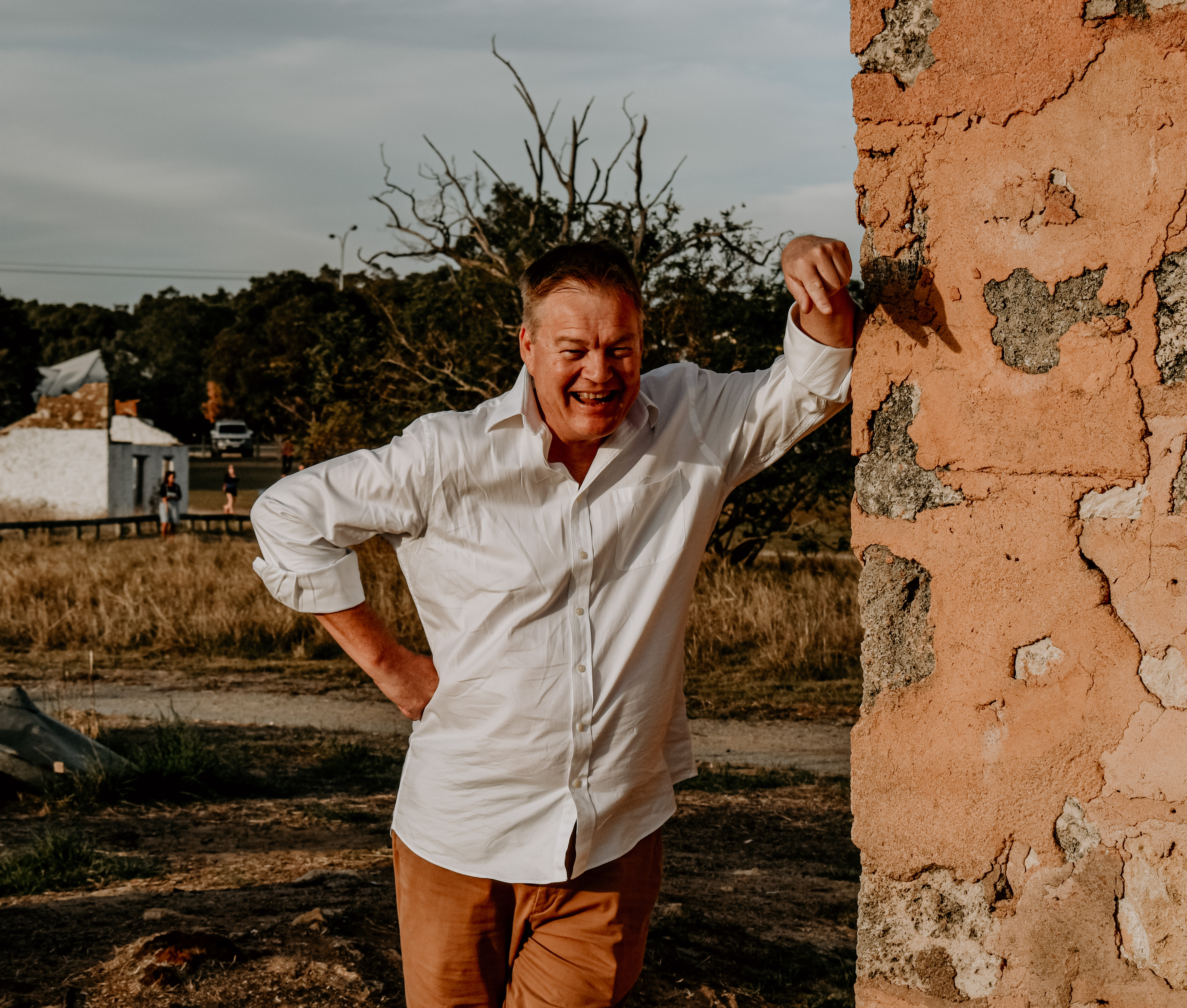
Chris Marshall is a Perth-based author whose multicultural upbringing—born in England, raised in Nigeria, and now living in Australia—informs his exploration of identity, grief, and quiet redemption. His fiction is grounded in human complexity, often set against vivid Australian landscapes and shaped by questions of responsibility, guilt, and repair.
Chris brings a unique perspective to his writing, drawing on a long career as an executive in the information technology sector, spanning resource mining, banking, finance, government, and technology services. He holds a Master of Business Administration, and his professional experience lends depth and credibility to the systems and conflicts explored in his novels.
Chris’s debut novel, Beneath the Cerulean Canopy, follows a man’s search for belonging across continents, from Nigeria to England to Australia. His soon-to-be-released second novel, Beneath the Breaking Lines, blends literary fiction with psychological suspense, focusing on the aftermath of a fatal bus crash and one man’s reckoning with guilt, sabotage, and redemption.
Beyond the page, Chris led a community fundraising organisation for over a decade, raising more than $500,000 for a children’s hospital in Western Australia. When he’s not writing, he enjoys playing guitar, composing songs, shooting eight-ball pool, and sharing a glass of fine Australian Shiraz at the 19th hole. He lives with his wife, Vicki, in a quiet, leafy suburb near Perth, and is proud of his children, grandchildren, and great-grandchildren.
Through his writing, Chris invites readers to reflect on their own journeys of self-discovery and resilience, offering narratives that resonate long after the final page is turned. While Beneath the Cerulean Canopy explored the quiet weight of memory and identity, Beneath the Breaking Lines was born from a desire to examine what lies beneath the surfaces we present to the world—the hidden truths, the fractured selves, and the moral lines we cross or conceal. As one character puts it: ‘It’s about hiding things—who we really are, what lies beneath the breaking lines, and the truths that surface when those lines begin to crack.’